
Hot rolling and cold rolling are the two core processes for shaping steel. The fundamental difference between them is not simply "high temperature" versus "normal temperature", but whether they exceed the recrystallization temperature of steel (which ranges from 450℃ to 600℃). This temperature boundary directly determines the internal structure, mechanical properties, and application scenarios of the steel - hot rolling focuses on "rough shaping" and serves as the core for supporting the majority of basic steel production; cold rolling aims for "precision processing" and concentrates on manufacturing steel with high precision and surface quality. Together, they form the "first rough then fine" industrial chain for steel processing.
I. Hot Rolling: "Efficient Rough Shaping" Above the Recrystallization Temperature
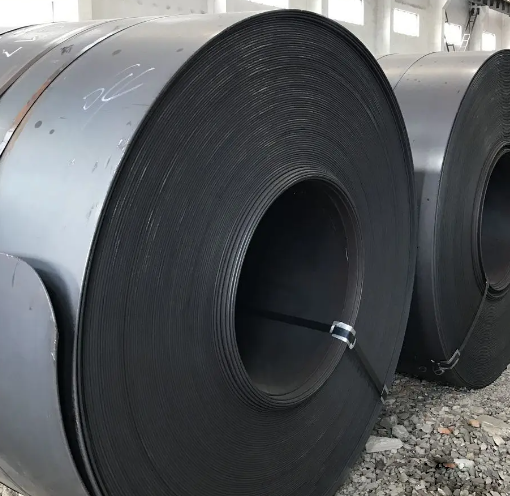
1. Process Essence and Flow
Steel ingots or billets have poor plasticity and are difficult to deform at room temperature. They need to be heated to 1100℃ to 1250℃ (far above the recrystallization temperature) to enhance plasticity, and then formed by rolling. This process is called hot rolling. The termination temperature of hot rolling is usually controlled at 800℃ to 900℃. The formed steel does not require additional heat treatment and is naturally cooled in the air. The cooling process itself is equivalent to a "normalizing treatment", which can initially optimize the crystal structure of the steel.
2. Core Characteristics Analysis
The most notable feature of hot-rolled steel is that a layer of iron oxide scale (mainly composed of Fe₂O₃ and Fe₃O₄) forms on the surface: This layer of iron oxide scale can give steel a certain degree of corrosion resistance, allowing it to be stored outdoors directly and reducing storage costs;
However, it also has obvious shortcomings - the surface is rough and the size fluctuates greatly (tolerance is usually above ±0.5mm), unable to meet the high requirements for surface smoothness or dimensional accuracy.
Therefore, hot-rolled steel is mostly used as a "basic raw material": if high-precision steel (such as cold-rolled sheet) needs to be produced, it must be further processed from the hot-rolled material.
3. Advantages and Disadvantages and Application Scenarios
Advantages: Suitable for large-scale and heavy-demand scenarios
High forming efficiency and compatibility: At high temperatures, steel has excellent plasticity, not only forming quickly and with high output, but also able to roll H-beams, I-beams, thick steel plates and other large-section profiles, with a rich form of sections, meeting the requirements of heavy-load scenarios such as building structures, mechanical bases, and pipelines;
Better internal structure: High-temperature rolling can break the "casting structure" of the steel ingot, eliminating internal coarse grains, bubbles, cracks, and porosity, making the steel structure denser, and significantly improving mechanical properties such as tensile strength and toughness along the rolling direction;
Lower production cost: No need for complex subsequent processes such as acid washing and annealing, the process is simplified, suitable for large-scale industrial production, and has obvious cost advantages.
Disadvantages: Limited precision and local performance
Risk of layering needs to be guarded against: During rolling, non-metallic inclusions (such as sulfides and oxides) in the steel will be pressed into thin sheets, forming a "layering phenomenon", resulting in a significant drop in tensile strength along the thickness direction of the steel, and possible "interlayer tearing" (the local strain during weld shrinkage can reach several times the yield strain, much greater than the strain generated by the load);
Residual stress affects stability: Due to the unevenness of "surface fast cooling and core slow cooling", residual stress (self-balancing internal stress without external force) will be generated inside the steel, and the larger the cross-sectional size of the profile, the more obvious the residual stress, which may affect the deformation control, stability and fatigue resistance of the component;
Surface and dimensional accuracy is low: The iron oxide scale causes the surface to be rough, unable to be used for appearance parts; the size tolerance is large, only suitable for structural components with low precision requirements, and difficult to meet the needs of precise manufacturing.